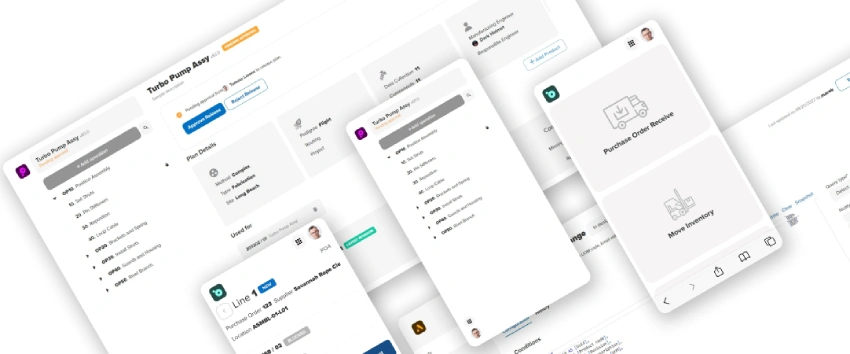
How Manufacturo Supports Robotics Manufacturers
Manufacturo was designed for robotics manufacturers to quickly scale, while meeting their requirements for controlled change management, tight quality enforcement, and full traceability.
Engineering Changes, Controlled at the Unit Level
Robotics products change mid-program — new actuator specs, updated sensor calibrations, revised assembly sequences. When a change needs to reach the floor, Manufacturo's redline workflow lets engineers push targeted updates to specific work orders without touching units that are already past that point. Each redline is tracked, approved, and tied to the exact serial numbers it applies to. Technicians always see the current instruction for their unit — no version confusion, no manual communication chain between engineering and the floor.
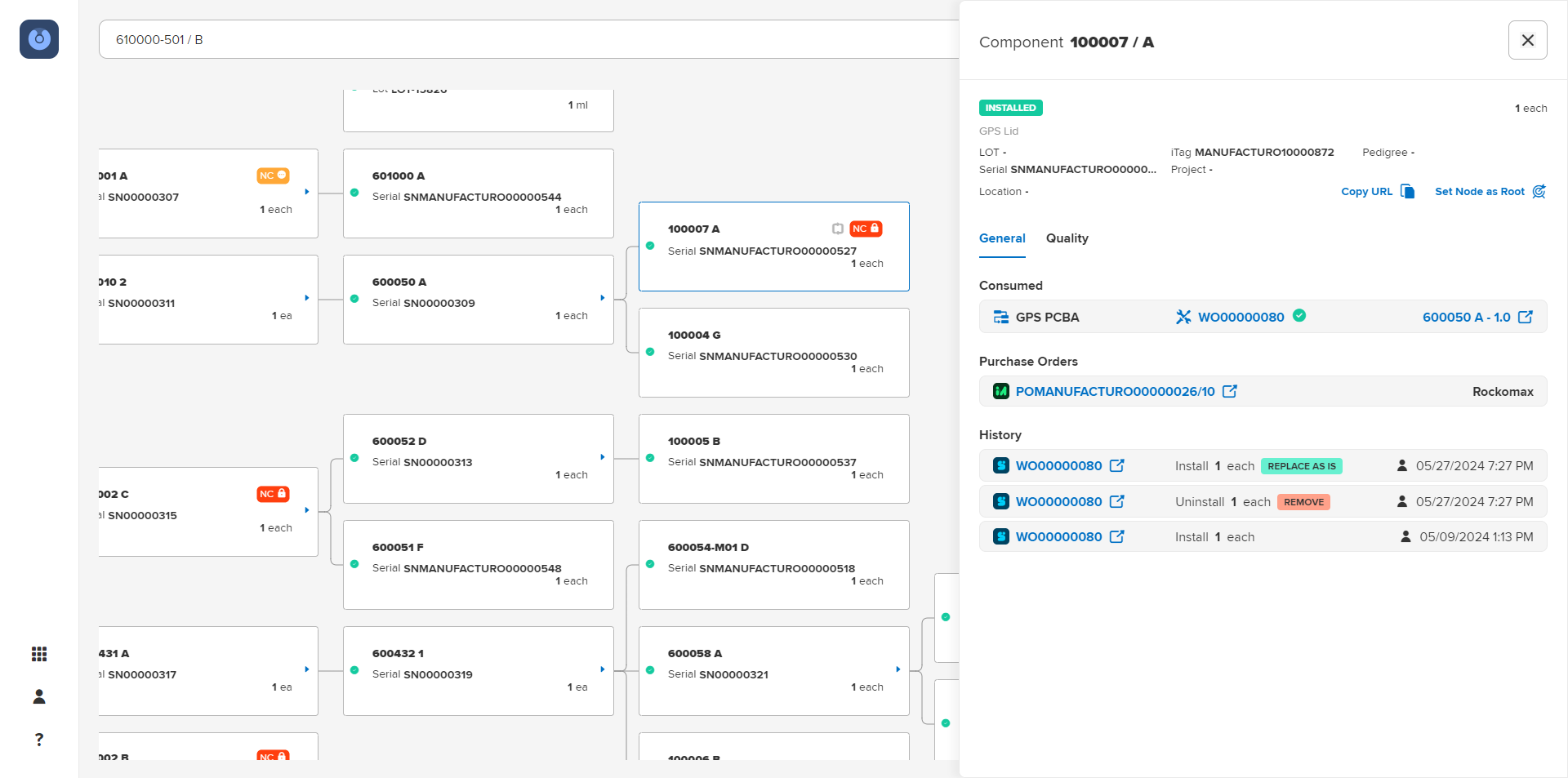
Before
- NC logged in a separate quality system
- Manual cross-reference to find the unit and lot
- Disposition tracked in email threads
- Root cause starts from data gathering, not data
After
- NC tied to exact unit, step, and components
- Containment and disposition in one flow
- CAPA pulls from real production evidence
- Audit-ready — lot, station, time window on demand
Closed-Loop Quality from Floor to CAPA
When quality lives in a separate system from execution, manufacturers pay the $10 and $100 version of every defect. Manufacturo embeds quality directly into execution. A nonconformance ties to the exact unit, build step, and components involved. Containment, disposition, and approvals run where the defect was found. CAPA investigations pull from real production evidence — which lots, which stations, which time window — so root-cause analysis starts from data, not data gathering.
Execution Structure Without ERP Overhead
Robotics companies with fewer than 500 employees rarely need an ERP — but they still need execution control, inventory visibility, and audit-ready traceability. Manufacturo delivers process routing, dispatching, and inventory control without the overhead of a legacy MES or ERP. Implementation can be completed in as little as two weeks. Operators are productive after a 20-minute walkthrough. Teams standardize across lines and sites as production grows, without re-platforming.
2 weeks
Implementation time
20 min
Operator onboarding

Traceability survives part swaps
Controlled substitutions at the BOM level

Fewer than 10 actuator suppliers globally
One allocation event can disrupt months of planning

BOM shifts don't break the as-built record
Ship-readiness decisions stay accurate across substitutions
Traceability Through Supplier Changes
Robotics supply chains are concentrated — high-precision actuators, for example, are produced by fewer than 10 suppliers globally, and a single allocation event can disrupt months of planning. Manufacturo manages controlled substitutions so traceability doesn't break when the BOM shifts. Inventory visibility, WIP status, and ship-readiness decisions stay accurate even when the parts on the line aren't the ones originally planned.
Trusted by 50+ advanced manufacturers

Why Scaling Robot Production Breaks Most Systems
Robotics teams may iterate in batches of 10 to 50 units just fine, but the jump to thousands of units exposes gaps prototyping tools were never designed to handle. Revisions arrive mid-build. Firmware diverges across units. Calibration data lives in spreadsheets no one trusts during an audit.
These gaps follow the 1-10-100 rule: $1 to prevent a defect, $10 to fix it on the line, $100+ when it escapes to a customer. Robotics companies shipping electromechanical and software assemblies together are especially exposed.
Legacy MES platforms average 6 to 12 months of implementation and require fixed process definitions that don't survive weekly design iteration. Manufacturo keeps pace with engineering velocity — without the overhead.

Built for the Problems Robotics Teams Actually Face
A manufacturing platform that is retrofitted for robotics companies may check basic requirements boxes, but dig further and its clear that its functionality will not address the day-to-day operational demands like the ones below.

Mixed-Discipline Assemblies
Robots often combine mechanical structures, electrical harnesses, PCBAs, sensors, actuators, and embedded software — with six or more disciplines converging at final assembly. Manufacturo tracks each discipline within the same genealogy, so a firmware version is as traceable as a motor lot number.

Frequent Design Iteration
Product-market fit in robotics means shipping, learning, and revising — often on weekly or biweekly cycles. Manufacturo handles engineering changes through redline workflows at the serial-number level, so engineering speed doesn't create production confusion.

Calibration and Test as Production Data
Calibration values, functional test results, and sensor alignment data are part of the product — not afterthoughts. Manufacturo captures these as structured data collection fields tied to each unit's build record, available for customer delivery packages, warranty decisions, and trend analysis.

Scaling from Pilot to Volume
The toolset that works for 50 units rarely works for 5,000. Manufacturo supports early-stage production structure and grows into multi-line, multi-site operations without a system migration. Over 50 manufacturers across aerospace, defense, energy, robotics, and unmanned systems run production on Manufacturo today.

Whether you're building autonomous mobile robots, humanoids, industrial arms, or unmanned systems — book a demo to see Manufacturo configured for your production environment.
Who Builds on Manufacturo
A growing number of high-complexity manufacturers, including robotics companies, are trusting Manufacturo to power their production environment.
Reflex Robotics designs and produces affordable general-purpose humanoid robots for warehouse and factory automation. Manufacturo supports Reflex's production team with traceability across electromechanical and software assemblies as they scale from early builds to volume manufacturing.
BRINC builds first-responder drones and robotic systems for public safety agencies across the United States. Manufacturo provides execution control and traceability across electromechanical and software assemblies.
Sierra Space is building the world's only commercial space plane. The team went live on Manufacturo in eight weeks and uses the platform for process routing, as-built records, and quality evidence across a complex hardware program.

Divergent Technologies delivers adaptive, high-performance structures for automotive and aerospace defense at production scale, using Manufacturo as the system of record for traceability and execution.
Features and Benefits for Robotics Manufacturers
These are some of the key platform features and the benefits they confer on robotics manufacturers looking to boost their production.
Book a custom demo to see how Manufacturo can be tailored to meet the demands of the defense industry based on your personalized requirements.